
Research
Influence of arousal state and behavior on brain blood flow
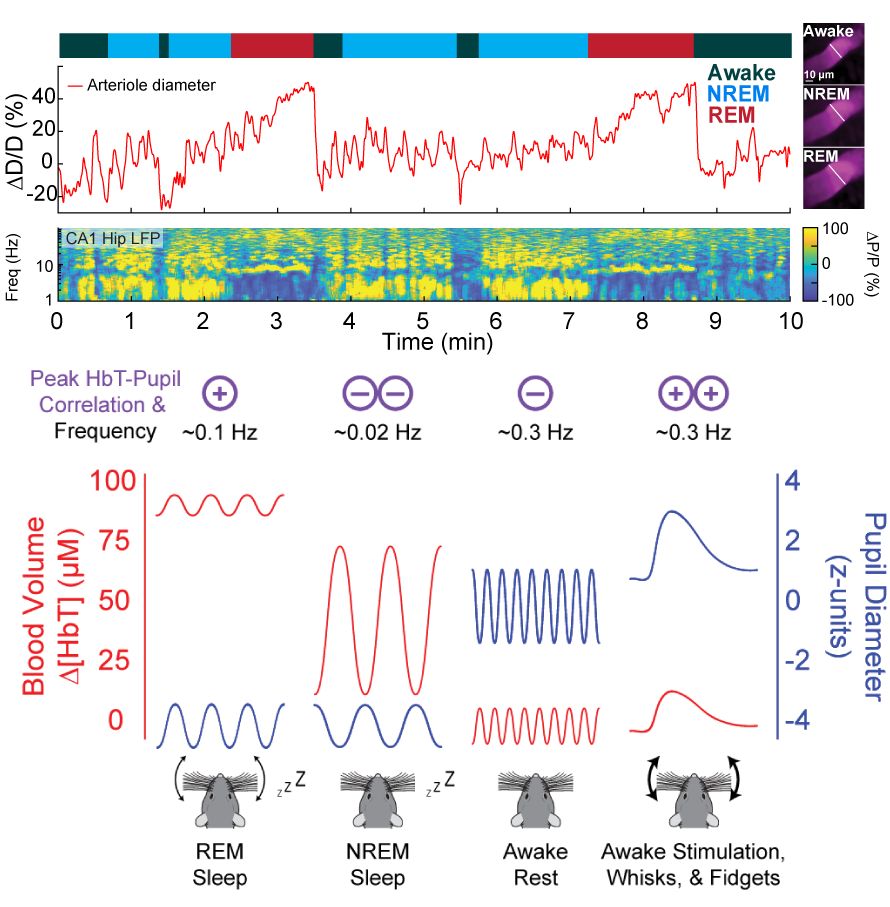
Sleep drives large arterial dilations and increases in blood flow in the brain (Turner 2020; Turner 2023; Gheres 2023) that may be important for keeping our brains healthy and functional. Spontaneous movements (fidgets, blinks, etc.) also drive coordinated changes in neural activity and blood flow in the brain (Winder 2017, Drew 2019; Turner 2023). We are working on understanding how these arousal-related vascular changes are controlled and coordinated, how they contribute to maintaining brain health.
Mechanical interactions between the brain and body
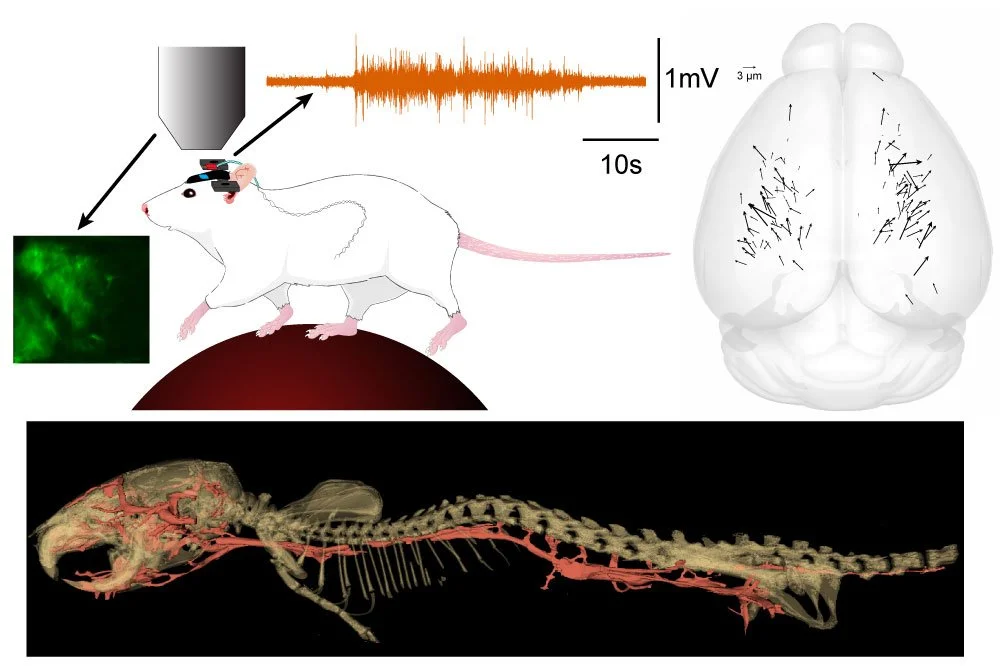
The brain is mechanically linked to the body. Mechanical forces generated by abdominal muscle contractions and respiration can be transferred to the central nervous system via a vascular ‘hydraulic system’, driving pressure changes and movement of the brain and cerebrospinal fluid (Garborg, 2026). Intracranial pressure changes caused by abdominal muscle contractions can cause rapid changes in the vasculature of the brain (Zhang, 2026). We are investigating the role mechanical interactions between the brain and the viscera play in health and disease. A better understanding of this brain-body mechanical link will help elucidate the beneficial effects movement and breathing.
The neurobiology of dreaming
Our dreams are amalgamations of remote and recent experiences, bringing together both mundane occurrences and life changing events. Even though dreams are not ‘real’ experiences, they can have enormous significance and can greatly influence our waking behavior. We are trying to understand the biological mechanisms that generate dreams and what role dreaming has by studying the behavior and brains of sleeping mice.